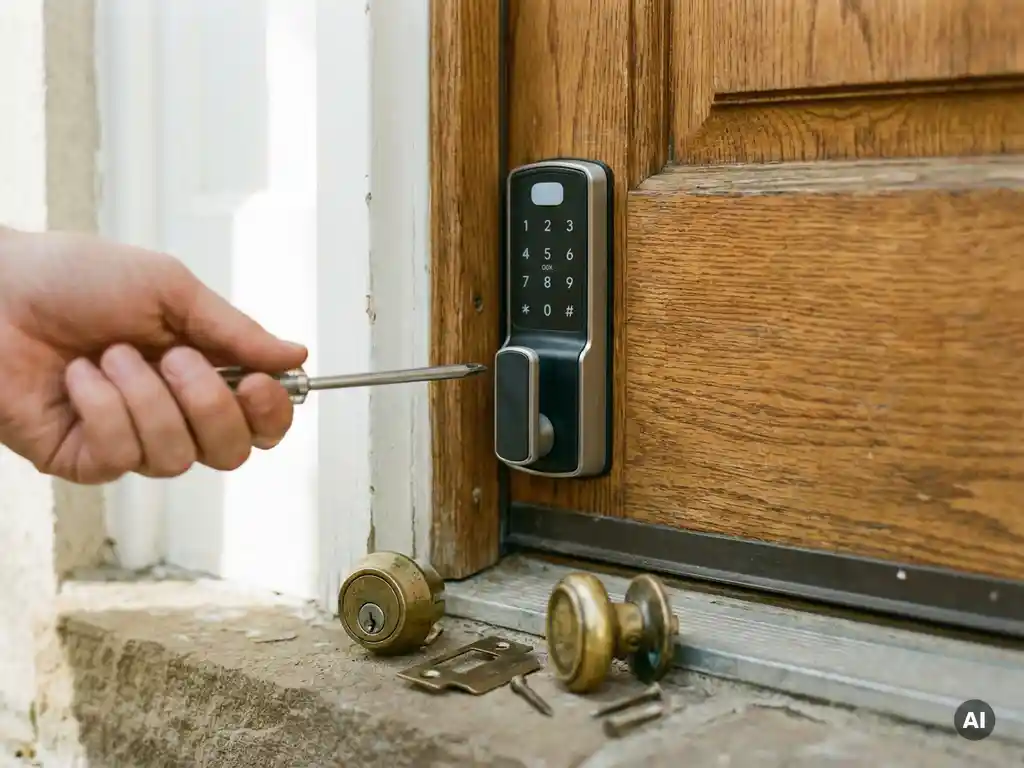
How do you replace an outdated locking system?
You replace an outdated locking system by first assessing the current system, choosing a suitable alternative, and then having the new locks or access system installed by a certified locksmith. This applies to both traditional cylinder locks and modern electronic systems. In this article, we answer the most frequently asked questions about replacing a locking system, from detection signals to costs and security levels. Do you have a question right away? Feel free to contact us with Sellox.
When is a locking system really due for replacement?
A locking system is due for replacement when it is mechanically worn out, no longer meets current security standards, or when control over key copies has been lost. Immediate replacement is also necessary following an attempted burglary, a move, or the dismissal of an employee with key access.
In addition to these urgent situations, there are also gradual signs pointing to an outdated system. Consider locks that are difficult to turn, keys that no longer work smoothly, or a system that is more than ten years old. Older locks often lack the security certifications that are considered standard today, such as the SKG marks common in the Netherlands.
Access management also plays a role for companies and institutions. When it is no longer possible to keep track of exactly who has access to which room, it is time to review the system. A modern solution offers not only better security, but also more control and flexibility.
What types of locking systems are available as replacements?
There are three main categories of locking systems as replacements: mechanical systems with cylinders and keys, electronic systems with cards or codes, and smart systems that are managed wirelessly via an app or central platform. The best choice depends on the type of property, the desired level of security, and the need for flexible access management.
Mechanical locking systems
Mechanical locks are the most traditional option and are available in various security classes. High-quality cylinders with an SKG quality mark offer good protection against burglary. They are easy to install and require no power or network connection, but offer limited flexibility when it comes to managing access rights.
Electronic and smart locking systems
Electronic locking systems work with cards, codes, or biometric data. Smart systems go a step further and can be operated and monitored remotely. For companies with multiple employees or locations, this offers significant advantages: access rights can be easily adjusted without the need to replace keys. You can find more information about the possibilities on the page about access control.
How does replacing a locking system work step-by-step?
Replacing a locking system proceeds in five steps: an inventory of the current situation, determining the requirements, selecting a suitable system, physical installation by a specialist, and a final inspection. The entire process typically takes one working day for an average building.
- Inventory: Map out the number of doors, locks, and users, and the bottlenecks in the current system.
- Requirements determine: Determine the required security level and whether central access registration is necessary.
- Select system: Based on the inventory, choose a mechanical, electronic, or smart locking system that matches the budget and preferences.
- Installation: A certified locksmith removes the old locks and installs the new system, including any wiring or software settings.
- Final check: All locks are tested, users receive their access credentials, and the system is documented.
How much does it cost to replace a locking system?
The cost of replacing a locking system varies widely and depends on the type of system, the number of locks, and the complexity of the installation. For a simple cylinder replacement at a home, you will easily pay between 75 and 200 euros per lock, including labor. Electronic and smart systems cost more, but also offer more functionality.
For larger premises or businesses with multiple doors, the costs naturally run higher. In addition, there are potential software licenses for central access control and annual maintenance. It is wise to request quotes from several specialized companies so that you can make a fair comparison. Also, consider the long term: a cheaper system that becomes obsolete faster may end up being more expensive in the long run than a high-quality investment.
Do you need to call a locksmith or can you do it yourself?
While you can sometimes replace a cylinder yourself to fit a single simple lock, for a complete locking system it is highly recommended to hire a certified locksmith. A professional guarantees correct installation, can advise on the appropriate security level, and works with certified products.
Replacing a lock yourself seems attractive due to the lower immediate costs, but it carries risks. An incorrectly installed lock offers less resistance during a burglary attempt than a professionally installed one. Moreover, faulty installation can affect the validity of insurance. With electronic systems, self-installation is complex anyway, as cabling, software settings, and integrations require specific knowledge.
What level of security does a new locking system need?
The required security level of a new locking system depends on the type of property, the value of what needs to be protected, and the risk assessment of the location. In the Netherlands, security classes (SKG stars) are used for mechanical locks, and standards such as EN 60839 for electronic access systems.
For an average home, a lock with two or three SKG stars is usually sufficient. Commercial premises, server rooms, or locations containing sensitive information require higher security classes and additional measures such as access registration and alarm integration. The security level must also align with the insurer's requirements, as many policies set minimum requirements for the security of a property.
A proper assessment of the required security level begins with a professional risk analysis. This prevents you from investing too little in a vulnerable property or, conversely, spending unnecessarily much on a situation that allows for a simpler solution.
Do you want to know which locking system best suits your situation, or do you want to schedule an appointment for replacement immediately? Contact us with Sellox, and our specialists are happy to think along with you.
Frequently Asked Questions
How long does it take before a new locking system is fully operational?
For an average home or small business premises, a new locking system is typically fully operational within one working day. For larger properties with multiple doors, complex wiring, or integration with existing software, installation may take two to three days. A certified locksmith will provide a realistic estimate in advance based on the assessment.
What should I do if I don't know how many keys to my current lock are in circulation?
If you do not have a complete overview of the number of outstanding keys, replacing the locking system is the safest and most sensible choice. Verifiable keys are a basic requirement for a secure property; as soon as this overview is missing, you cannot guarantee who has access. When replacing, consider a system with keys equipped with copy protection, or switch to an electronic system where access rights are managed digitally and can be easily revoked.
Can I connect an electronic locking system to my existing alarm system?
Yes, many modern electronic and smart locking systems can be integrated with existing alarm systems, provided both systems are compatible or can be connected via a linking module. It is important to discuss this in advance with both the supplier of the locking system and the provider of the alarm system. A certified locksmith can assess the available integration options and whether additional hardware or software is required.
What is the difference between a cylinder replacement and a completely new locking system?
With a cylinder exchange, only the inner core of the lock is replaced, while the existing lock body remains in the door. This is a quick and relatively inexpensive solution when the lock is still in good mechanical condition. A completely new locking system also includes the replacement of the lock body, the hardware, and possibly the door closer, and is necessary when the lock is outdated, no longer meets safety standards, or when switching to a different type of system, such as from mechanical to electronic.
What common mistakes should I avoid when replacing a locking system?
A common mistake is choosing the cheapest system without considering the required security level or the insurer's requirements. Additionally, many people underestimate the importance of professional installation: an incorrectly installed lock offers significantly less resistance to burglary. Finally, people frequently forget to inform all users and document the system after replacement, which can cause problems later during management or expansion.
How do I maintain a new locking system to extend its lifespan?
Mechanical locks will continue to function properly for longer by lubricating them once or twice a year with a dry lubricant, such as graphite powder or a special lock spray — never use WD-40, as this attracts dust and damages the lock over time. Electronic systems require periodic software updates and battery checks, and for wired systems, an annual technical inspection is recommended. A maintenance contract with a specialized company like Sellox offers the assurance that the system always functions optimally.
Is it possible to replace a locking system in phases instead of all at once?
Yes, phased replacement is certainly possible and is often used for larger properties or limited budgets. Start with the most critical access points, such as the main entrance and rooms containing sensitive information, and replace the remaining locks at a later stage. Discuss this with the locksmith in advance so that the chosen system is scalable and future expansions seamlessly integrate with the already installed portion.