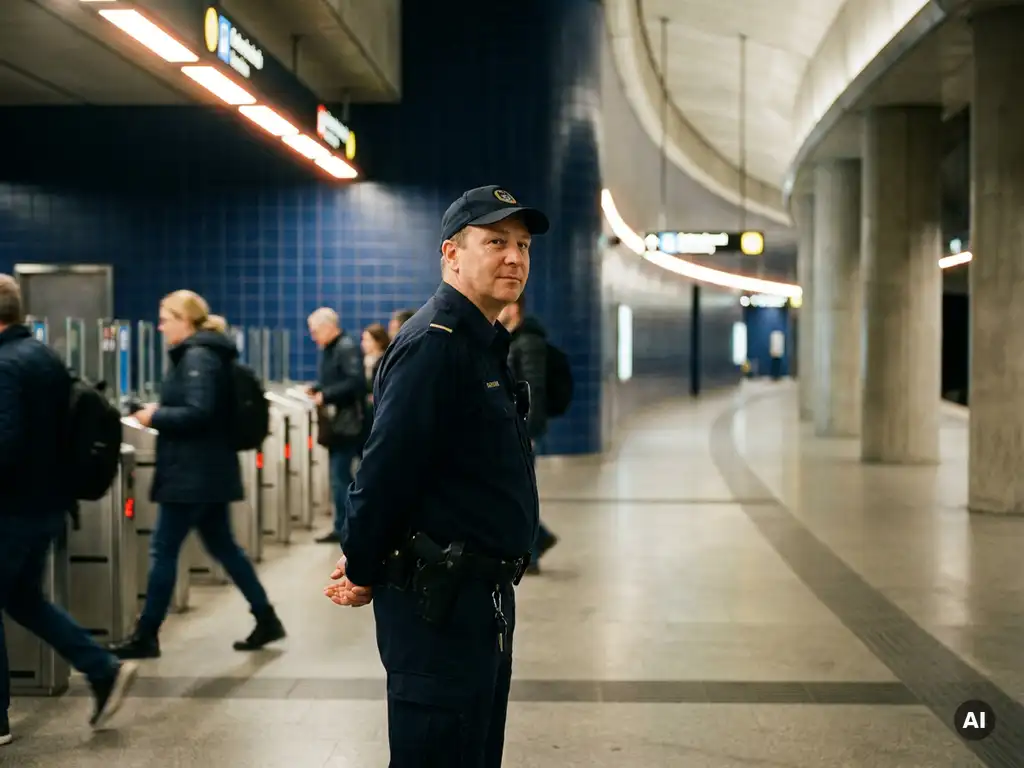
How do you secure a metro station?
You secure a metro station by having a combination of technical systems, trained security personnel, and strict procedures work together. The key lies in a layered approach whereby access control, camera surveillance and human presence complement each other. Do you want immediate advice on the security of a specific location, then feel free to contact us with Sellox. In this article, we answer the most frequently asked questions about metro station security.
What security risks are specific to metro stations?
Metro stations present a unique combination of risks due to the high flow of passengers, their underground location, and their critical infrastructure function. The primary risks are pickpocketing and violence on busy platforms, vandalism and graffiti, unauthorized access to technical rooms, and, in the worst case, terrorist threats or sabotage of the infrastructure.
The underground environment presents additional challenges. Escape routes are limited, communication can be more difficult, and emergency services require more time to arrive. Furthermore, a metro station attracts vulnerable groups, such as homeless people seeking warmth, which calls for a security approach that is both decisive and people-oriented.
Busy moments during the morning and evening rush hours significantly increase the risk of incidents. During these periods, the likelihood of conflicts, falls on platforms, and attempted theft is highest, requiring an increased deployment of personnel and technical resources.
Which technical security systems are deployed in metro stations?
In metro stations, multiple technical security systems are deployed in combination: camera surveillance (CCTV), access control via turnstiles or card readers, emergency call systems, public address systems, and sometimes facial recognition or behavioral analysis software. These systems work together from a central control room that is continuously staffed.
Camera surveillance and analysis
Modern metro stations utilize extensive camera networks that cover every corner of the station. Increasingly, these cameras are linked to intelligent software that automatically detects anomalous behavior, such as someone standing still on a platform for a long time or an abandoned bag. This significantly reduces response times during incidents.
Access control and platform gates
An effective access control system is indispensable in a metro station. Platform gates not only prevent fare evasion but also form a physical barrier that limits unauthorized access to secured zones. Technical rooms, control rooms, and station management offices are secured with electronic locks and card reader systems that record who had access and when.
How much security personnel is needed for a metro station?
The required number of security personnel for a metro station depends on the size of the station, the daily passenger numbers, and the opening hours. As a rule of thumb, a medium-sized metro station requires a minimum of two to four security personnel per shift, supplemented by mobile surveillance and a manned control room.
Large hub stations in a city like Amsterdam or Rotterdam require significantly more staff, especially during rush hour and when events are taking place nearby. In addition to fixed posts at strategic locations, deploying patrols through the station is effective for demonstrating a presence and deterring potential offenders.
The quality of the staff weighs at least as heavily as the quantity. Security personnel in a metro station must be trained in conflict management, first aid, evacuation procedures, and dealing with diverse groups of travelers. A well-trained team of four employees performs better than a poorly instructed team of eight.
How does the cooperation between metro security and the police work?
Cooperation between metro security and the police takes place via established protocols and information sharing. Security personnel act as the first line of defense and call in the police in the event of serious incidents. In many cities, there are structural cooperation agreements whereby the police are regularly present at busy stations and conduct joint patrols with security personnel.
Central control rooms play a crucial role in this. They monitor the camera footage and can establish direct contact with both their own security personnel and the police control room. In the event of an incident, a fixed reporting procedure determines who takes which action, ensuring there is no overlap or delay.
Information is regularly exchanged regarding known perpetrators, recent incidents, and threat levels via briefings and digital systems. This shared knowledge enables both security and the police to act proactively rather than merely reacting to what has already gone wrong.
What are the legal obligations for the security of metro stations?
In the Netherlands, metro stations fall under the category of vital infrastructure, which means that the operator is legally obliged to take appropriate security measures. This includes, among other things, an obligation to draw up a security plan, conduct risk analyses, and work with certified security personnel who hold a valid identification card for security work.
The Private Security Organizations and Detective Agencies Act (Wpbr) regulates the requirements that security companies and their employees must meet. Security personnel must be screened by the police and possess the appropriate professional qualifications.
In addition, specific requirements apply regarding fire safety, escape route signage, and emergency procedures, which are laid down in the Building Decree and supplementary municipal ordinances. The operator is ultimately responsible for compliance with all these obligations and can be held accountable for deficiencies during inspections.
How is the security of a metro station evaluated and improved?
The security of a metro station is continuously evaluated through incident registration, periodic risk analyses, audits, and exercises. After every significant incident, an evaluation report is drawn up, which leads to adjustments in procedures, technology, or staffing. Annual security audits assess whether the security level still aligns with current threats.
Practical exercises, such as evacuation drills and simulated incidents, are a valuable tool for exposing weaknesses in the security chain. They test not only the knowledge of personnel but also the functioning of technical systems and cooperation with emergency services.
Technological developments are playing an increasingly important role in improving station security. New generations of camera software, improved access control systems, and better communication tools make it possible to respond to threats more quickly and effectively. A good security partner actively helps determine which innovations align with the specific situation of the station.
Do you want to have the security of your metro station or other public location handled professionally? Contact us contact Sellox for a no-obligation consultation.
Frequently Asked Questions
What does the security of a metro station cost on average per year?
The costs for metro station security vary significantly depending on the size of the station, the number of security personnel, the technical systems, and the opening hours. For a medium-sized station, you should account for a combination of personnel costs (often the largest item), investments in camera systems and access control, and maintenance contracts. Based on a risk analysis, a specialized security partner like Sellox can provide a realistic cost estimate that aligns with your specific situation and legal obligations.
How do you, as a security team, deal with homeless people and vulnerable individuals in a metro station?
Addressing vulnerable individuals requires a people-centered policy in which security personnel are trained in de-escalation and social skills. In practice, metro stations collaborate with municipal authorities, street outreach workers, and shelter organizations to this end, which can be called upon when someone needs help. The goal is not only to maintain order but also to refer individuals to the appropriate support services, ensuring that vulnerable people are not simply turned away but are actually helped.
Which measures are most effective against pickpocketing and theft on busy platforms?
The most effective combination against pickpocketing is visible camera surveillance coupled with active patrol rounds by recognizable security personnel, supplemented by targeted awareness campaigns for travelers. Intelligent camera software that detects anomalous behavior, such as someone standing unusually close to others or circling, enables the security team to intervene preventively before a theft occurs. Communication via public address systems to warn travelers during busy periods is a low-threshold but proven effective additional measure.
How quickly must a security team be able to respond to an incident at a metro station?
As a rule of thumb, security personnel must be able to reach the scene of an incident on the platform or in the station within two to three minutes. This requires well-thought-out positioning of staff, clear communication protocols via walkie-talkie or headset, and a staffed control room that can immediately dispatch the nearest employee. For serious incidents requiring police or an ambulance, it is essential that the control room simultaneously alerts the emergency services to save valuable time.
What must be included in an emergency procedure for a metro station?
A robust emergency procedure for a metro station includes, at a minimum, clear evacuation routes and protocols, an alerting and communication structure for both staff and passengers, agreements regarding cooperation with the police, fire department, and ambulance services, and procedures for specific scenarios such as fire, medical emergencies, and suspicious objects. The procedures must be regularly practiced with all involved parties and evaluated and adjusted after every exercise or incident. Also, do not forget to include communication with passengers via public address systems and digital information boards in the procedure.
Are there specific certifications or quality marks that a good security company for metro stations must meet?
In the Netherlands, every security company deployed at locations such as metro stations is required to hold a license under the Private Security Organizations and Detective Agencies Act (Wpbr), issued by the Ministry of Justice and Security. Additionally, the BORG quality mark is an important mark of quality demonstrating that a security company meets high quality and reliability standards. When selecting a security partner, always ask about these certifications as well as demonstrable experience with public transport locations.
How do you involve travelers themselves in safety at a metro station?
Travelers are a valuable but often underutilized link in the safety chain of a metro station. Through clear communication via signs, announcements, and campaigns, travelers can be encouraged to report suspicious situations via a visible emergency call system or a hotline. Research shows that an environment that is clean, well-lit, and actively staffed also psychologically encourages travelers to be more vigilant themselves and to intervene or report unwanted behavior more quickly.