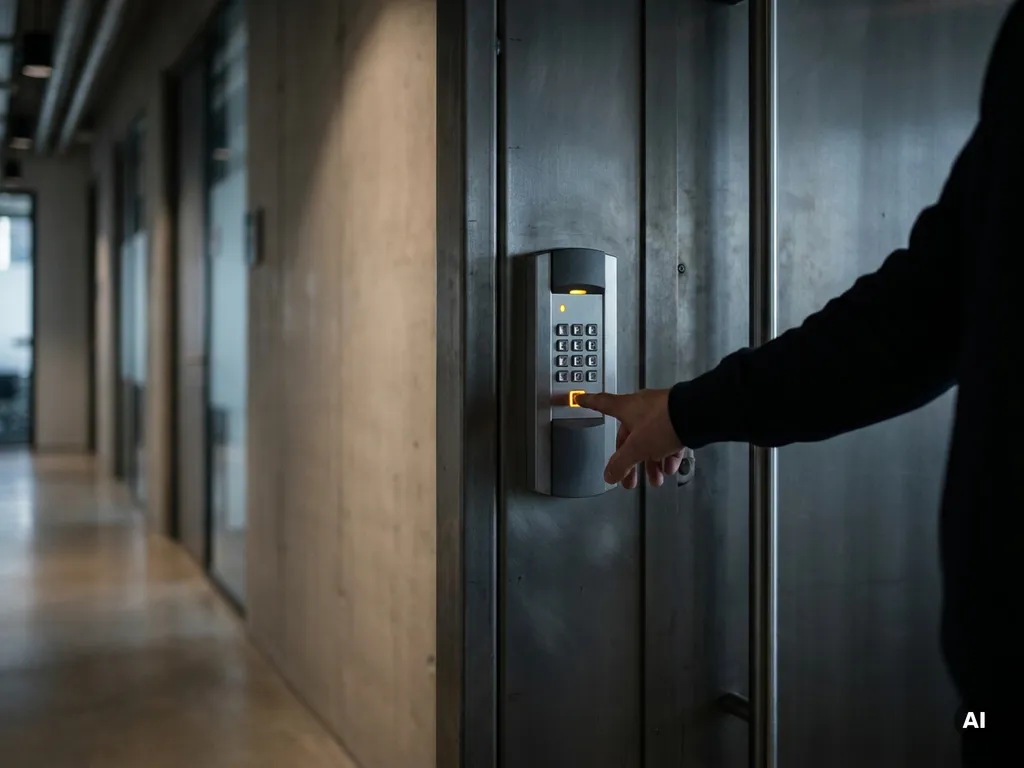
What is access control?
Access control is the sum of measures, systems, and procedures by which an organization determines who has access to specific areas, systems, or information. The goal is to keep unauthorized persons out and allow authorized persons to pass through smoothly. Both physical locations and digital environments fall under this concept. In this article, we answer the most frequently asked questions about access control, from how it works in practice to choosing the right system. Do you want immediate advice? Feel free to contact us with Sellox.
How does access management work in practice?
Access control works by linking an identity to an access right. A person identifies themselves via a card, PIN code, biometric characteristic, or a combination thereof. The system compares this identification with a database of access rights and then automatically decides whether the door opens or access is denied.
In practice, this means that an employee, for example, holds an access card against a reader at the entrance of a building. The system registers the moment of access, stores it in a logbook, and sends a signal to the door or control panel. Administrators can remotely grant, revoke, or modify rights via software without being physically present. In larger organizations, zones are set up so that an employee on the ground floor has access but not to the server room on the second floor.
What are the different types of access control?
There are four commonly used models for access control: role-based (RBAC), rule-based (RuBAC), attribute-based (ABAC), and discretionary access control (DAC). The most common model in organizations is role-based access control, where an individual's position determines which rights they are granted.
Role-based access control (RBAC)
With RBAC, every employee is assigned rights based on their role within the organization. A receptionist is granted access to the lobby and meeting rooms, but not to the warehouse. This model is easy to manage and scales well with larger teams.
Attribute-based access control (ABAC)
ABAC goes a step further and takes multiple characteristics into account simultaneously, such as time, location, device, and function. For example, an employee can be granted access to a room only during office hours and exclusively when they are at the company location. This model offers more flexibility but also requires more configuration.
What is the difference between physical and digital access control?
Physical access control regulates who may enter a building, room, or premises. Digital access control determines who has access to systems, networks, applications, or data. The fundamental difference lies in the object being secured: a door versus a digital environment.
In practice, both forms increasingly overlap. Modern systems, for example, combine a physical access card with a digital login, so that someone who is not physically present cannot gain access to the network. This is also known as integrated access control. For organizations that manage both locations and sensitive data, a combined approach is the most robust choice.
Which technologies are used in access management?
The most commonly used technologies in access control are RFID cards and readers, key cards, PIN code panels, biometrics (fingerprint, facial recognition, iris scan), mobile access via smartphone, and video intercom. The choice depends on the desired level of security and the environment.
RFID remains the most widespread technology due to its low cost and ease of use. Biometric systems offer a higher level of security because they cannot be copied like a card, but they are more expensive to purchase and require attention to privacy legislation. Mobile access via an app is rapidly gaining ground because it requires no physical carriers and is easy to manage remotely. For environments with high security requirements, multiple technologies are combined in multi-factor authentication.
When is an access control system mandatory or recommended?
An access control system is legally required in specific sectors such as the financial sector, the healthcare sector, and for organizations that handle state secrets or personal data on a large scale. For most companies, a system is not mandatory, but strongly recommended whenever multiple employees, sensitive areas, or valuable assets are involved.
Under the GDPR (General Data Protection Regulation), organizations are required to take appropriate technical and organizational measures to protect personal data. An access management system falls directly under this. In addition, many insurers and certification bodies (such as ISO 27001) impose requirements on an organization's access security. In 2026, we also see increasing pressure from the NIS2 directive on organizations in vital sectors to demonstrably secure their physical and digital access.
What should you look for when choosing an access control system?
When choosing an access management system, you consider scalability, integration capabilities, ease of use, remote management, and the total cost of ownership. A system that suits ten employees today must also work when the organization grows to one hundred.
Listed below are the key points:
- Scalability: Can the system grow with your organization without complete replacement?
- Integration: Does it integrate with existing systems such as time tracking, alarm systems, or HR software?
- Remote management: Can permissions be modified via a cloud platform or app?
- Ease of use: Is the system intuitive for both administrators and users?
- Privacy legislation: Does the system comply with the GDPR, particularly when using biometrics or log registration?
- Maintenance and support: Is there a reliable party available for installation, updates, and troubleshooting?
A good supplier considers the specific situation of your location and advises on the right combination of technologies. View it Sellox offer for customized access management. Do you have any questions or would you like to request a quote? Contact us with our specialists.
Frequently Asked Questions
How long does the installation of an access control system take on average?
The installation time depends heavily on the size of the project. For a small office with one or two access points, a system is often operational within one day. At larger locations with multiple zones, integrations, and dozens of readers, the installation can take several days to weeks. A good supplier creates a clear schedule in advance and ensures that business continuity is guaranteed during the installation.
What happens if an employee loses their access card?
In the event of a loss of an access card, an administrator can immediately block the card remotely via the management software, without the need for physical intervention. This is a major advantage over traditional keys, where replacing locks may be necessary. Subsequently, a new card is easily created and linked to the employee's existing access rights. It is recommended to have a clear internal protocol for reporting and blocking lost cards.
Can I connect an access control system to my existing alarm system or camera surveillance?
Yes, most modern access control systems are designed to integrate with alarm systems, CCTV surveillance, and other security solutions. Linking these systems creates a complete overview of who was present where and when, allowing suspicious situations to be detected and verified more quickly. When choosing a system, always pay attention to the available integration options and ask the vendor about compatibility with your existing infrastructure.
Is mobile access via a smartphone secure enough for sensitive environments?
Provided it is configured correctly, mobile access is a secure and modern solution, even for sensitive environments. Smartphones use encrypted communication and can be combined with additional security layers such as biometric unlocking or two-factor authentication. The risk of a lost phone is comparable to that of a lost pass: access can be revoked remotely immediately. For environments with the highest security requirements, mobile access is often combined with an additional verification method.
What are the most common mistakes when implementing an access control system?
A common mistake is failing to regularly update access rights, resulting in former employees or external parties unintentionally retaining access. Additionally, organizations often underestimate the importance of a clear zoning structure, which can result in everyone having access everywhere or, conversely, the system operating too restrictively. Privacy legislation regarding log registration and biometrics is also frequently overlooked. A good approach begins with a thorough inventory of who needs access to which areas, followed by periodic audits of the configured rights.
How does access management handle visitors and temporary employees?
Most access control systems offer the ability to create temporary or limited access rights specifically intended for visitors, contractors, or temporary staff. These rights can be set with an expiration date and time, so that access expires automatically without manual action. Some systems even offer a digital visitor registration portal allowing visitors to sign up in advance and automatically receive a temporary badge. This enhances both security and the professional image of the organization.
What are the average costs of an access control system and what does the price depend on?
The costs of an access management system vary widely and depend on the number of access points, the chosen technology, the desired functionalities, and whether the system is managed cloud-based or on-premise. A simple system for a small office starts at just a few hundred euros, while a comprehensive solution for multiple locations can run into tens of thousands of euros. In addition to the purchase costs, also consider installation costs, licensing fees for the management software, and any annual maintenance. Requesting a customized quote provides the most accurate picture for your specific situation.