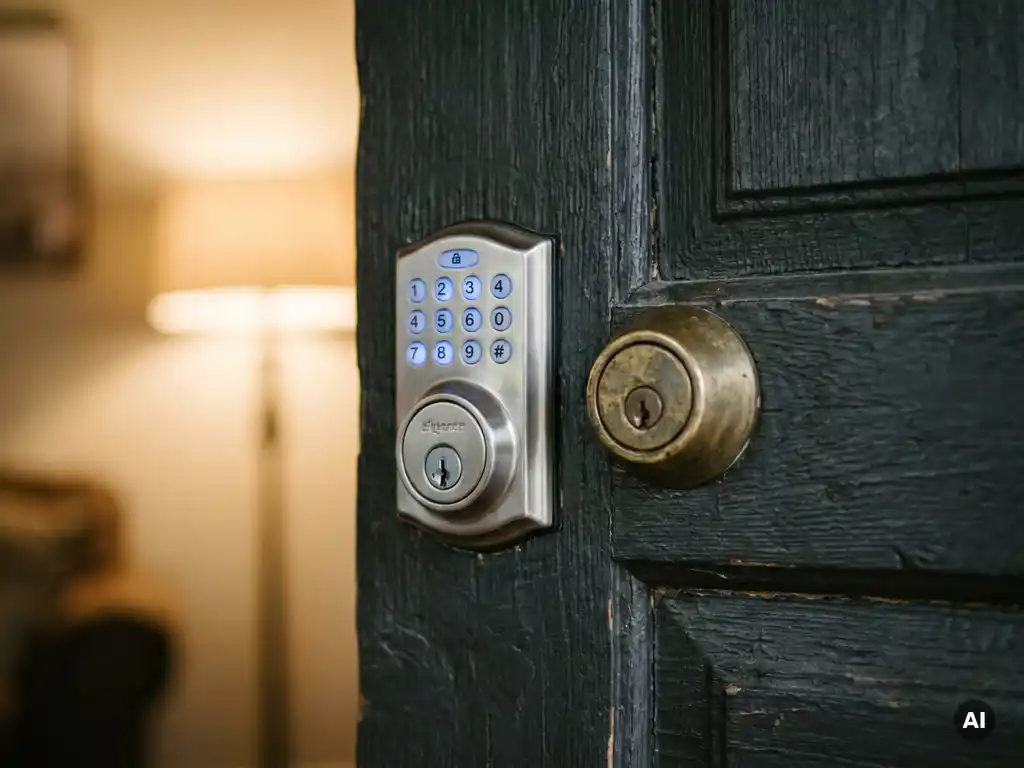
What is the difference between a mechanical and an electronic lock?
A mechanical lock operates purely mechanically via a key and cylinder, while an electronic lock grants access via a code, card, fingerprint, or app. The biggest difference lies in the way of access control: Mechanical locks are simple and reliable, while electronic locks offer more flexibility and control. Do you have questions about which type best suits your situation? You can also simply contact with Sellox for personal advice. In this article, we answer the most frequently asked questions about both types of locks.
How do mechanical and electronic locks work differently?
A mechanical lock operates via a physical key that positions pins or discs in the cylinder correctly, causing the door to open. An electronic lock replaces this mechanical action with a digital signal originating from a PIN code, RFID card, biometric scan, or smartphone. The core of the difference is that mechanical locks do not require electricity, whereas electronic locks depend on a power source.
With a mechanical lock, the key serves as both identity verification and the drive. With an electronic lock, these two functions are separated: verification is performed digitally, and only then does an electric motor or magnet activate the lock system. This makes electronic locks much more flexible to use, but also slightly more complex to install and maintain.
Which type of lock offers more security?
Neither is safer in all cases. High-quality mechanical locks with a certified cylinder offer excellent physical resistance to burglary. Electronic locks add an extra layer of security through audit logs, time management, and the ability to revoke access remotely. The best security depends on the application and the threat profile.
A high-quality mechanical lock, such as an SKG-certified cylinder, is very difficult to force or copy. Electronic locks eliminate the risk of lost or copied keys, but can be vulnerable to digital attacks or hardware manipulation if poorly secured. In practice, many companies and institutions opt for a combination of both: a sturdy mechanical lock as a physical barrier, supplemented by electronic access control for management and monitoring.
What are the costs of a mechanical versus an electronic lock?
Mechanical locks are generally cheaper to purchase and install. A high-quality mechanical lock typically costs between twenty and one hundred euros, while electronic locks start at around one hundred euros and can run up to several thousand euros for advanced systems. The total cost depends heavily on the chosen system and the scale of the installation.
With electronic locks, you must also consider additional costs such as cabling, a central server or cloud subscription, battery replacement, and software updates. Mechanical locks have hardly any maintenance costs, but replacing locks after a lost key or a change in staff can quickly add up if you have many doors. In the long run, electronic systems can actually be more cost-effective for larger organizations, because key management takes place digitally and centrally.
When is an electronic lock the better choice?
An electronic lock is the better choice when you require multiple users, changing access rights, or a record of who enters when. This applies to offices, healthcare facilities, hotels, and commercial buildings, where access management requires more than a simple lock-and-key solution.
Specific situations where an electronic lock is clearly preferred:
- You want to grant access to employees without distributing physical keys.
- You need time-limited access, for example, only during office hours.
- You want to open or block a door remotely.
- You need an audit log of who had access and when.
- Staff changes regularly, and otherwise key management becomes impractical.
For private homes with a stable household, an electronic lock is a useful upgrade, but not always necessary. The added value is greatest in environments with many users and complex access requirements.
Can electronic locks fail, and what happens then?
Yes, electronic locks can fail due to power outages, dead batteries, software errors, or hardware damage. Most high-quality electronic locks have a built-in emergency solution, such as a physical key cylinder, an emergency power connection, or a battery backup, so that the door can still be operated in the event of a malfunction.
How an electronic lock reacts in the event of a malfunction depends on the setting: some locks fall open in the event of a power failure (fail-open), which is useful for escape routes but unsafe for secured areas. Other locks fall shut (fail-secure), which blocks access but guarantees safety. It is important to check which failsafe mechanism the lock has when purchasing and whether this matches the function of the door. Regular maintenance and timely battery replacement prevent most malfunctions in practice.
Which lock is most suitable for home?
For most homes, a high-quality mechanical lock is still the most practical and reliable choice. A certified cylinder offers good burglary resistance without relying on electricity or software. If you want more comfort, such as keyless access or opening a door remotely for visitors, an electronic lock or a smart door lock is a valuable addition.
The choice for your home revolves around three questions: how many users do you have, how often do you lose keys or want to grant temporary access, and how important is operation via your smartphone? For a family with children who regularly forget their keys, an electronic lock with a PIN code can make daily life much easier. For those who value simplicity and reliability without technical dependencies above all else, a good mechanical lock remains the sensible choice.
Are you unsure which lock best suits your home or business premises? Contact us with Sellox for expert, tailored advice.
Frequently Asked Questions
Can I convert an existing mechanical lock to an electronic lock without modifying the door?
In many cases, this is possible, especially with so-called 'retrofit' electronic locks that are mounted over or in place of the existing cylinder. Smart cylinder locks, such as those from brands like Nuki or Danalock, fit onto the inside of a standard lock cylinder without requiring any modification to the door structure. However, it is important to check whether your door and lock are compatible with the desired system; Sellox can advise you on this.
What about privacy with electronic locks that use an app or cloud connection?
Electronic locks that operate via an app or the cloud store access data — sometimes locally on the device, sometimes on external servers. When purchasing, it is important to check where the data is stored, who has access to it, and whether the manufacturer complies with the GDPR (General Data Protection Regulation). Preferably choose systems with end-to-end encryption and a transparent privacy policy, and avoid cheap locks from unknown brands without clear data security guarantees.
What is an SKG certification and how do I know which certification level I need?
SKG is a Dutch certification body that tests locks for burglary resistance; locks are rated with one, two, or three stars, with three stars offering the highest resistance. For the average home, an SKG** (two-star) cylinder is usually sufficient, while SKG*** is recommended for doors with a higher risk profile or as a requirement of your insurer. Always check the terms and conditions of your contents or buildings insurance as well, as some insurers set requirements regarding the certification level of your locks.
What should I do if I want to deny an employee or tenant access — how does that work with both types of locks?
With a mechanical lock, revoking access practically means replacing the cylinder or having it re-keyed, which entails costs and time—especially if multiple doors are involved. With an electronic system, it suffices to deactivate the relevant card, PIN code, or user account in the management software, which is arranged within seconds without physical modifications. This is precisely one of the greatest practical advantages of electronic access control in environments with changing staff or tenants.
Are electronic locks also suitable for exterior doors and resistant to weather conditions?
Yes, but not all electronic locks are suitable for outdoor use — pay attention to the product's IP rating when purchasing. An IP54 rating offers protection against dust and splashing water, while IP65 or higher is suitable for harsher weather conditions such as rain and extreme temperatures. For exterior doors, always choose a lock specifically designed for outdoor use and check whether the manufacturer offers guarantees regarding temperature resistance, as extreme cold or heat can affect the operation of batteries and electronics.
Can I combine an electronic lock with an alarm system or home automation system?
Yes, many modern electronic locks are designed to integrate with alarm systems, video doorbells, and home automation platforms such as KNX, Z-Wave, or Zigbee. This allows you to automatically trigger the alarm, for example, when the door is locked, or receive a notification if the door is opened unexpectedly. When purchasing, check which protocols and integrations the lock supports so that it seamlessly connects to your existing or planned systems.
What are the most common mistakes when choosing or installing a new lock?
A common mistake is choosing based on price alone, without considering the threat profile or usage situation — a cheap lock on a vulnerable exterior door is a weak link. With electronic locks, people frequently underestimate the importance of a backup solution in the event of a power outage or a dead battery, which can leave them locked out. Finally, installation is often underestimated: an incorrectly installed lock — mechanical or electronic — offers significantly less resistance than advertised, so professional installation always pays off.