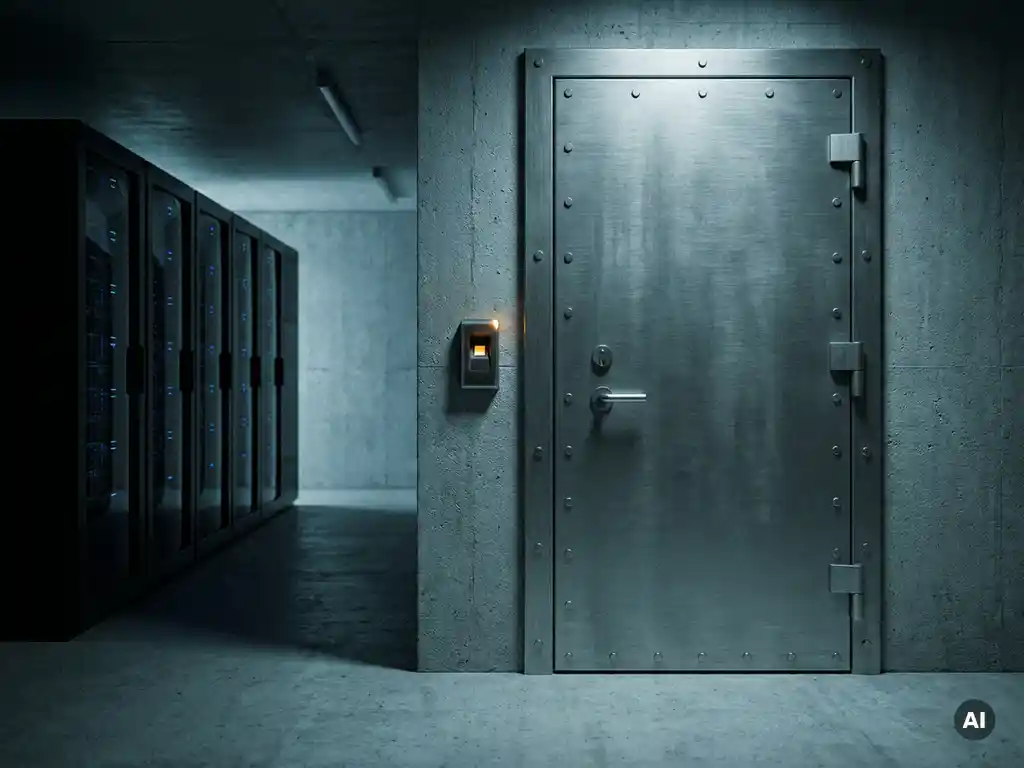
How do you secure a data center against unauthorized access?
You secure a data center against unauthorized access by combining multiple physical and digital security layers. Think of fencing, access gates, biometric verification, camera surveillance, and strict visitor protocols. Effective data center security is never based on a single measure, but on a layered system where each layer reinforces the previous one. In this article, we answer the most frequently asked questions about securing data centers. For personal advice, you can always contact with our specialists.
Which access layers physically protect a data center?
A data center is physically protected by at least three to five concentric security layers: the outer perimeter, the building itself, the internal zones, and the server rooms. Each layer requires separate authentication so that an intruder who breaches one layer is still stopped by the next. This principle is called “defense in depth” and is considered the gold standard in data center security.
The outermost layer typically consists of fencing, barriers, and surveillance cameras that enclose the premises. Inside this is building-level access control, with secure doors and airlocks. Next are internal zones with restricted access, such as technical rooms and cooling systems. The deepest layer is the server hall itself, accessible only to authorized technical personnel. The more sensitive the data, the more strictly each layer is secured.
Which technologies are used for access control?
For access control in data centers, biometrics, smart access cards, PIN code systems, and mantraps (airlocks with double doors) are used. Biometric technologies such as fingerprint scanners, iris recognition, and facial recognition offer the highest level of security because they cannot be transferred or stolen like a card.
Smart access cards based on RFID or NFC are the most widely used technology due to their practical applicability. They are often combined with a PIN code for two-factor authentication. An effective access controlThe system links these technologies to a central platform that tracks who entered which area and when. Mantraps prevent multiple people from entering a secured zone simultaneously, a technique that effectively combats tailgating.
How are visitors and suppliers checked upon entry?
Visitors and suppliers are checked upon entry via a combination of identity verification, registration, guidance, and temporary access means. They are never granted independent access to sensitive zones and are always accompanied by an authorized employee. Pre-registered visits are checked against an approved list.
The process typically begins before the visit: visitors must register, sign a confidentiality agreement, and are screened based on the purpose of the visit. Upon arrival, they present valid identification, receive a temporary visitor badge, and are registered in the access system. Suppliers bringing equipment are subjected to additional checks regarding what they carry into and out of the premises. All movements are logged and retained as part of the security audit trail.
What is the difference between physical and logical access security?
Physical access security protects the hardware and spaces of a data center, while logical access security regulates access to systems, networks, and data. Both are indispensable: without physical security, someone can access the servers directly; without logical security, systems can be compromised remotely.
Physical access security
Physical security encompasses everything visible and tangible: fences, doors, locks, cameras, guards, and access cards. The goal is to prevent unauthorized persons from entering the building or specific zones. Physical measures focus on presence and location.
Logical access security
Logical security governs who has access to which systems, applications, and data. This is achieved through passwords, multifactor authentication, role-based access rights, and encryption. Both layers must be aligned: an employee with physical access to a server room must not automatically also have digital access to all systems located there.
How do you detect an attempted intrusion in a data center?
Attempts to break into a data center are detected through a combination of motion sensors, camera surveillance, alarm systems, and real-time monitoring of access logs. Modern systems automatically analyze patterns and trigger an alarm in response to suspicious activity, such as repeated failed attempts or access outside regular working hours.
Nowadays, camera footage is increasingly analyzed using video software that recognizes anomalous behavior, such as someone standing at a door longer than usual. Access logs provide a digital record of every movement within the premises. When an employee attempts to gain access to a zone for which they do not have the necessary rights, the system immediately generates an alert. Security personnel following up on the alerts form the human link in this detection system.
Which standards and certifications apply to data center security?
The most relevant standards for data center security are ISO 27001, the Uptime Institute Tier classifications, and NEN 7510 for healthcare-related data. ISO 27001 is the international standard for information security and sets requirements for both physical and logical security measures. Data centers that want to convince customers of their reliability typically obtain independent certification.
The Uptime Institute Tier classification (Tier I to Tier IV) assesses the availability and redundancy of a data center, but also addresses physical security requirements. Tier IV data centers, the highest category, are designed to remain operational even in the event of a physical intrusion or disaster. In addition to international standards, sector-specific guidelines also apply in the Netherlands, such as the BIO (Baseline Information Security Government) for government agencies. Certification is not only a mark of quality but also a contractual requirement of many business customers and regulators.
A well-secured data center requires a well-thought-out combination of technology, procedures, and people. Whether you are responsible for your own server environment or want to improve the security of a colocation facility, the right approach begins with a thorough analysis of the current situation. Contact us Contact Sellox for a no-obligation consultation on the security of your data center.
Frequently Asked Questions
How do I start improving the security of an existing data center?
Start with a thorough security audit in which you map out the current physical and logical security layers and compare them to recognized standards such as ISO 27001 or the Uptime Institute Tier classifications. Identify the weakest links, such as missing two-factor authentication or insufficient camera coverage, and prioritize improvements based on risk. Engaging an external security specialist for an independent assessment is a practical first step that brings blind spots to light.
What are the most common mistakes in data center security?
One of the most common mistakes is relying on only a single security measure, such as an access card alone without additional verification. Other common errors include failing to regularly update access rights when employees change roles or leave the company, and the lack of a clear visitor and supplier protocol. Neglecting the human factor, such as insufficient training of employees on tailgating or social engineering, is also a risk that technology alone cannot solve.
How often should access rights and security protocols be reviewed?
Access rights must be checked at least quarterly and adjusted immediately in the event of personnel changes, such as departures or job changes. Security protocols as a whole should be evaluated at least annually, but also following incidents, audits, or significant changes to the infrastructure. An automated access management system can help streamline this process by automatically generating notifications when access rights expire or need to be reviewed.
Is camera surveillance alone sufficient to secure a data center?
No, camera surveillance is a valuable detection tool, but it does not constitute a complete security solution in itself. Cameras record what happens but do not actively prevent an intruder from gaining access to a room. Effective data center security requires that camera surveillance be combined with physical access control, alarm systems, and human surveillance that can intervene quickly upon an alert.
What should I do if an employee loses their access card?
A lost access card must be blocked immediately in the central access management system to prevent misuse. Record the loss in the security audit trail and investigate whether the card may have been stolen, which may justify additional measures such as temporarily increasing the surveillance level. Issue the employee a new card after their identity has been re-verified and ensure the incident is documented as part of your incident response procedure.
How does the security of a colocation data center differ from a private server room?
At a colocation data center, you share the physical security infrastructure with other tenants, which means the provider is responsible for perimeter and building security, while you remain responsible for the security of your own equipment and data within the rented space. With your own server room, you have full control over all security layers, but also full responsibility and the associated costs. It is important to contractually stipulate with a colocation provider which security standards and certifications they adhere to, and how incidents are reported.
What role does staff play in overall data center security?
Personnel constitute both the strongest and weakest link in data center security: well-trained employees recognize suspicious situations and act correctly, but untrained personnel can unknowingly introduce risks through social engineering or allowing unauthorized access. Regular security training, clear protocols for reporting suspicious behavior, and a culture where security is taken seriously are therefore just as important as technological measures. Also consider periodic drills, such as simulated tailgating attempts, to test whether employees react correctly.