How do you restore security after a burglary?
After a burglary, you restore security by first identifying all weak points, replacing damaged locks and doors, and then upgrading your camera surveillance and alarm systems. Furthermore, anyone who wants to structurally prevent burglars from returning invests in professional access control. Unsure where to start? Feel free to contact us with Sellox for personal advice. This article answers the most frequently asked questions after a burglary step by step.
What security vulnerabilities does a burglary leave behind?
A burglary always exposes concrete weaknesses in your security. The most common security vulnerabilities are damaged or forced locks, broken door frames, shattered windows, blind spots without camera surveillance, and an alarm system that responded too late or not at all. All these vulnerabilities must be patched before your home or business premises are safe again.
In addition to visible damage, there are also less obvious vulnerabilities. Burglars often scout a property beforehand and know exactly which entrances are unguarded, which doors are weak, and where there are no cameras. After a burglary, it is therefore important not only to repair the damage but also to understand how the burglar gained entry and why that was possible. Only then can you implement structural improvements.
How do you conduct a security inspection after a burglary?
A security inspection following a burglary is carried out by systematically checking all entry points, security systems, and blind spots of the premises. Start at the burglar's point of entry and work from the outside in. Document every weak spot with photos and notes so that you don't overlook anything.
Follow the following steps during your inspection:
- Check all doors and windows for damage to the lock, the frame, and the hinges and locks.
- Assess the lighting around the building and determine which places are poorly lit.
- Check the camera footage to determine whether the cameras captured the burglary and which angles are missing.
- Test the alarm system and check whether notifications have been sent to the correct persons or control room in a timely manner.
- Inventory means of access such as keys, passes, or codes that may be in the hands of the burglar.
After this inspection, you will have a clear picture of what needs to be addressed immediately and what can be improved in the longer term.
Which locks and doors should you replace immediately?
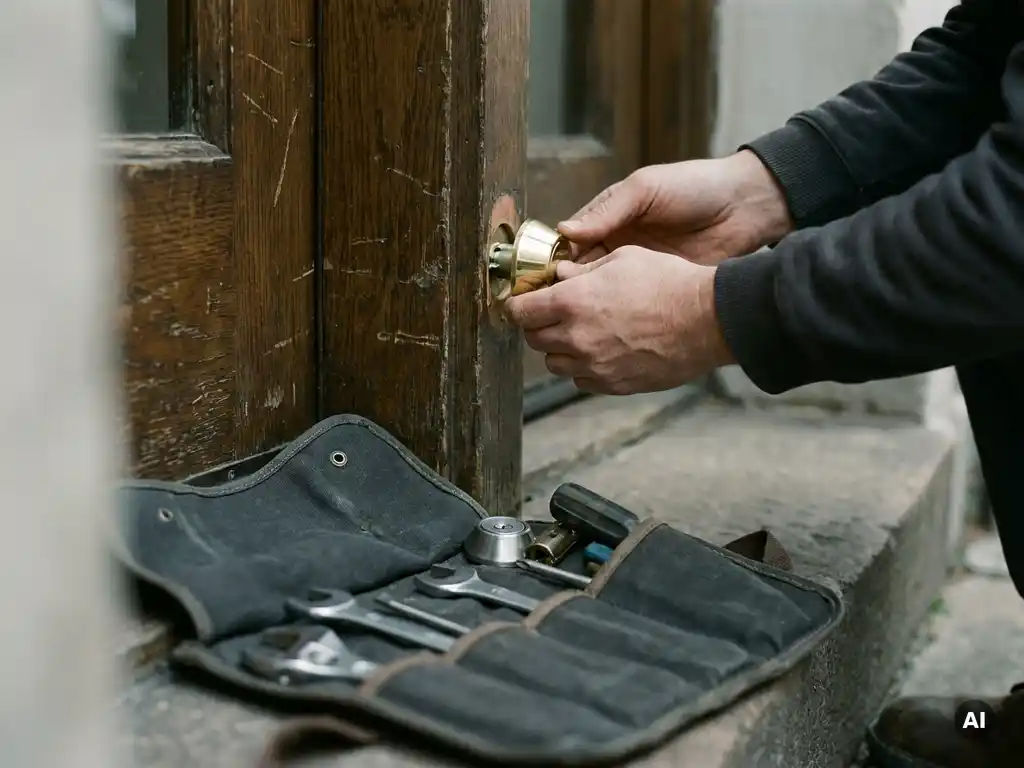
Immediately after a burglary, replace any lock or door that has been forced, damaged, or otherwise compromised. Even if a lock appears visually intact but has been tampered with, replacement is advisable. Never delay this: an insecure lock is an open invitation for a repeated burglary.
When replacing, choose locks with an SKG quality mark, preferably three stars. This mark indicates that the lock has been tested for burglary resistance. Additionally, consider replacing standard cylinders with anti-core pulling locks, which are much more difficult to force. Also pay attention to the door frame: a strong lock in a weak frame offers insufficient protection. Reinforced door frames or security hardware can make the difference here.
If keys are missing or if you are unsure how many copies are in circulation, have the entire lock system replaced. This applies to both residential and commercial properties.
How do you improve camera surveillance and alarm systems after a burglary?
After a burglary, improve camera surveillance and alarm systems by first analyzing why the existing systems failed or provided insufficient deterrence. Then, add cameras in blind spots, ensure higher image resolution, and connect the alarm system to a professional monitoring center for immediate follow-up.
Optimizing camera surveillance
Check the image quality of your current cameras and determine if the resolution is high enough to recognize faces and license plates. Add cameras at all entry points, the property boundary, and in dark corners. Consider cameras with motion detection and night vision. Store footage in the cloud or at an external location so that recordings are not lost if equipment is stolen.
Boost alarm systems
An alarm that only emits sound is less effective than a system that sends a notification directly to a monitoring center or security service. Have the system checked for potential sabotage and consider a system with volumetric detection, which picks up movement within the room itself. Also ensure that the system is regularly tested and maintained.
When should you hire a security company after a burglary?
You engage a security company after a burglary as soon as you are unable to objectively assess the weak points yourself or remedy them professionally. In practice, this is the case with most burglaries. A security company offers not only technical expertise but also an independent perspective on the situation.
For commercial properties, professional engagement is almost always necessary, especially when access control is in place for employees or visitors. A specialist can assess which combination of physical security, camera surveillance, and digital access management is most suitable for your situation. The sooner you engage a security company, the lower the risk of a repeated break-in during the vulnerable period immediately following the incident.
How do you prevent burglars from returning?
You prevent burglars from returning through a combination of physical barriers, visible detection devices, and smart access management. Burglars typically choose easy targets. By visibly improving the security of your property, you significantly reduce its attractiveness.
Concrete measures that discourage return:
- Good outdoor lighting with motion sensors, so that burglars expose themselves.
- Visible cameras which indicate that the property is actively guarded.
- Sturdy locks and doors which are forced are time-consuming and noisy.
- Professional access management with which you precisely control who has access to which room and when.
- Variation in routines, so that it is more difficult for outsiders to recognize patterns.
For businesses, a layered security system is most effective. In this system, physical security, electronic access control, and camera surveillance work together as a single unit. This creates multiple barriers that a burglar must overcome, which increases the likelihood of apprehension and reduces the attractiveness of the target.
Do you want to be sure that your security is at the right level after a burglary? Contact us with Sellox for a professional security inspection and personalized, tailored advice.
Frequently Asked Questions
How soon should I act after a burglary to prevent further damage?
Ideally, you should act within 24 hours of the burglary: have damaged locks and doors replaced or temporarily secured immediately so that the property is safe again that very night. Burglars sometimes return the same week, knowing that security has not yet been restored. If necessary, call in a locksmith and security company on the same day, and also notify the police so that there is an official report for your insurance.
Does my insurance cover the costs of improving security after a burglary?
Most contents and buildings insurance policies cover direct damage to locks, doors, and windows, but do not automatically cover the costs of upgrading your security. However, some insurers offer reimbursement or a discount if you can demonstrate an investment in better security measures, such as certified locks or a professional alarm system. Check your policy terms and contact your insurer to discuss what is covered and which improvements might result in a premium benefit.
What should I do if I suspect that keys or access cards were stolen during the burglary?
Always treat a missing key or access card as an active security risk and have the lock system or access management replaced or blocked as soon as possible. With electronic access management, you can easily deactivate a stolen card remotely without having to replace the entire system, which is a major advantage over traditional keys. Also, make a list of all persons who had a copy and inform them of the situation so that everyone is alert.
Is it sensible to inform neighbors or the neighborhood after a burglary at my home or business?
Yes, certainly. Informed neighbors pay closer attention to suspicious situations around your property and can raise the alarm sooner. Many municipalities have neighborhood watch apps or WhatsApp groups where you can post a report, so that others in the neighborhood are also extra alert. Burglars regularly operate in the same area, so a shared report can prevent recurrence for both you and your neighbors.
What is the difference between a standard alarm system and a system connected to a monitoring center, and which one do I need?
A standard alarm system only produces sound on-site and relies on bystanders responding, whereas a monitoring center-connected system automatically alerts a professional monitoring center that takes immediate action, such as dispatching a security service or the police. For business premises and homes in less busy areas, a monitoring center connection is highly recommended because the response time is significantly shorter. The additional costs of a monitoring center subscription are usually far outweighed by the extra security and sense of safety it provides.
How do I know if my new security is truly sufficient, and not just provides a sense of security?
An objective measure is to have a professional security inspection carried out by a certified security company, which assesses your situation based on recognized standards such as the Police Quality Mark for Safe Living (PKVW) or the SKG quality mark for locks. Additionally, you can cast a critical eye yourself by thinking like a burglar: walk around your property in the evening and ask yourself which entrances are still vulnerable. Security is not a one-off action but an ongoing process in which you regularly test, maintain, and, if necessary, adjust your systems.
What are the advantages of professional access management compared to traditional locks for commercial premises?
Professional access management offers complete control over who has access to which room and when, including a digital record of all entry and exit, which is impossible with traditional keys. You can easily adjust access rights remotely, for example when an employee leaves or after a security incident, without having to replace locks. Moreover, the system is scalable: from a single access point to a complete building management system with multiple zones, levels, and user groups.