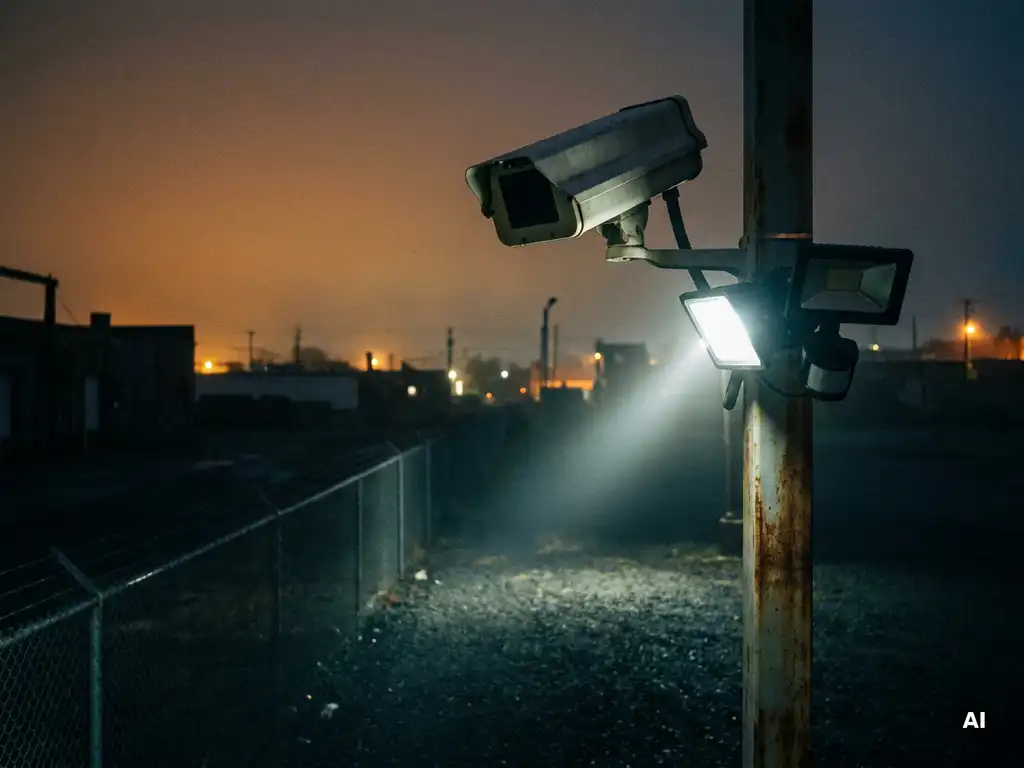
How do you secure an unmanned location?
You secure an unmanned location by combining multiple layers of security: camera surveillance, access control, alarm systems, and professional follow-up. Which combination is most suitable depends on the nature of the location, the risks, and the applicable legislation. In this article, we answer the most frequently asked questions about securing locations without permanent staff. Would you like immediate, tailored advice? Feel free to contact us with Sellox.
What risks do unmanned locations without security face?
Unmanned locations without security face a significantly higher risk of burglary, vandalism, theft, and unauthorized access. Because there is no staff present to intervene immediately or detect suspicious behavior, incidents often remain undetected for longer. This increases both material damage and the likelihood that perpetrators will go unpunished.
Consider construction sites, vacant buildings, storage areas, server rooms, or recreational areas outside opening hours. All these locations are vulnerable when no one is present. Without visible or active security, they serve as an easy target. Moreover, unauthorized visitors can cause dangerous situations, both for themselves and for the location. A fire, leak, or sabotage that is not discovered in time can lead to significantly greater damage than if prompt action were taken.
Which security measures are suitable for unmanned locations?
Suitable security measures for unmanned locations include camera surveillance, access control, alarm systems, fencing, and mobile surveillance. The most effective approach combines preventive measures that deter unwanted visitors with detection systems that provide an immediate alert in the event of an incident.
A layered approach works best. Physical barriers such as fences and locks form the first line of defense. Access control regulates who is allowed to enter the location and records every entry attempt. Camera surveillance ensures continuous monitoring and evidence gathering. An alarm system detects intrusion or movement and automatically sends a signal to a control room. Mobile surveillance adds a human component through periodic on-site checks.
The right combination depends on factors such as the size of the location, the goods present, the surroundings, and the risk level. A storage warehouse in an industrial area requires a different approach than a vacant office building in a residential area.
How does camera surveillance work at a location without staff?
Camera surveillance at an unmanned location works via cameras that continuously record images and, in smart systems, automatically perform analyses on movement, behavior, or object recognition. Upon detection, the system sends a notification to a control room or responsible person, who can monitor remotely and take action if necessary.
Modern camera systems for unmanned locations are equipped with video analysis. This means that the software itself can distinguish between a passing car, an animal, or a person behaving suspiciously. In this way, unnecessary alerts are limited and real incidents are recognized more quickly.
The footage is stored in the cloud or on a local recorder. In the event of an incident, the recordings can be used as evidence. Some systems are also equipped with loudspeaker and lighting functions, allowing a control room to immediately alert intruders without anyone needing to be on site.
What is the difference between alarm response and mobile surveillance?
Alarm response means that a professional control room responds to an alarm signal and dispatches an intervention team if necessary. Mobile surveillance is a proactive service in which security personnel drive past the location at fixed or varying times for a visual check, without an alarm needing to have gone off first.
Alarm response: reactive and fast
In alarm response, a control room responds to a notification from an intrusion detector, camera system, or other alarm device. The control room assesses the situation, contacts the designated contact person, and dispatches an intervention team if necessary. This is a reactive service: action is taken after a system has detected an incident. The major advantage is the rapid response time in the event of an actual burglary or emergency.
Mobile surveillance: proactive and visible
Mobile surveillance is preventive in nature. Security personnel drive past the location at irregular intervals, check doors, gates, and lighting, and ensure a visible presence that deters potential intruders. This is effective at locations where the risk of incidents is high or where a visible deterrent is desired, even outside of times when an alarm sounds.
Many organizations opt for a combination of both: an alarm system that activates a monitoring center upon detection, supplemented by periodic mobile patrols to proactively monitor the location.
What legislation applies to camera surveillance at unmanned locations?
In the Netherlands, the General Data Protection Regulation (GDPR) applies to camera surveillance at unmanned locations. This means that camera images are considered personal data as soon as individuals are recognizably visible. As an owner or manager, you are required to have a legitimate purpose for the surveillance, to document this, and to inform those involved via clear camera signs.
Specifically, the following obligations apply:
- There must be a legitimate interest, such as the protection of property or the safety of the location.
- Those involved must be informed via visible camera signs, even if the location is unmanned.
- Images may not be retained longer than necessary; in practice, a maximum of four weeks often applies.
- Access to images must be restricted to authorized persons.
- If the cameras film a public space, additional rules may apply.
On private property, such as a private business plot or storage site, camera surveillance is generally permitted provided the above conditions are met. In case of doubt, it is advisable to seek legal advice or consult a security specialist familiar with the applicable regulations.
How do you choose the right security solution for your unmanned location?
You choose the right security solution based on a risk analysis of the location: what are the assets present, what are the most likely threats, and what response time is acceptable in the event of an incident? Based on that analysis, you determine which combination of camera surveillance, access control, alarm response, and potential mobile surveillance is appropriate.
Start with the following questions:
- What do you want to protect? Goods, data, buildings, or a combination thereof.
- How big is the location? This determines how many cameras, sensors, or access points are needed.
- Who needs access and when? A good access control system handles this automatically and records every access attempt.
- What is the risk level? A location in an area with high crime rates calls for a more intensive approach.
- What are the legal obligations? Consider GDPR compliance for camera footage and sector-specific regulations.
A professional security partner performs a site scan and draws up a security plan based on it. This way, you do not pay for unnecessary measures, but you do cover all relevant risks. Contact Sellox for a no-obligation consultation on the security of your unmanned location.
Frequently Asked Questions
How quickly does a control room respond to an alarm from an unmanned location?
The response time of a control room typically ranges from 30 seconds to a few minutes after receiving an alarm signal. Modern systems with video analysis enable the control room to immediately assess the situation visually, thereby preventing unnecessary interventions and prioritizing genuine incidents. The time until the physical arrival of an intervention team on site varies by region and provider, but in most cases ranges between 10 and 30 minutes.
What are the most common mistakes when securing an unmanned location?
A common mistake is deploying only a single layer of security, such as exclusively cameras without alarms or access control, resulting in no active follow-up in the event of an incident. Other common errors include installing cameras with blind spots, failing to comply with GDPR obligations such as the absence of camera signage, and underestimating the importance of proper lighting at the location. A professional site scan helps to identify these blind spots early on.
Is securing an unmanned location also possible without an internet connection?
Yes, there are security systems that operate via 4G or LTE connections, meaning a fixed internet connection is not required. This also enables security at remote locations such as construction sites, agricultural areas, or temporary storage locations. However, please keep in mind that cloud storage of footage and real-time notifications depend on a stable data connection, and discuss the possibilities with your security partner.
How long does it take to install a security system for an unmanned location?
Installation time depends heavily on the size of the location and the chosen security solutions, but for an average location, this typically ranges between one and a few working days. Simple systems with a limited number of cameras and an alarm panel are operational quickly, while comprehensive systems with access control, multiple sensors, and connection to a monitoring center require more preparation. A good security partner plans the installation so that the location is unsecured for as little time as possible during the transition period.
As the owner, can I monitor the situation myself via the cameras at my unmanned location?
Yes, most modern camera systems offer the ability to view remotely via a secure app or web portal, even if no alarm has been triggered. This provides owners and managers with extra control and peace of mind, for example, to check whether deliveries have proceeded correctly or if there are any irregularities. However, ensure that access to the footage is properly secured with strong authentication and that usage complies with GDPR guidelines.
What does the security of an unmanned location cost on average?
Costs vary significantly depending on the size of the location, the desired level of security, and the chosen services such as alarm response or mobile surveillance. Generally, you can expect one-time installation costs for hardware and setup, supplemented by monthly subscription fees for monitoring and follow-up. A professional security partner will propose a tailored solution after a site scan, ensuring you only pay for what is actually needed and not for unnecessary measures.
How do I inform visitors or local residents about the camera surveillance at my location?
Under the GDPR, you are required to inform everyone entering the location or who may be visible in the footage about the presence of cameras. You do this by placing clearly visible camera signs at all entry points, stating the purpose of the surveillance and the contact details of the controller. For locations bordering a public space, additional information obligations may sometimes apply; in case of doubt, consult a legal advisor or security specialist.