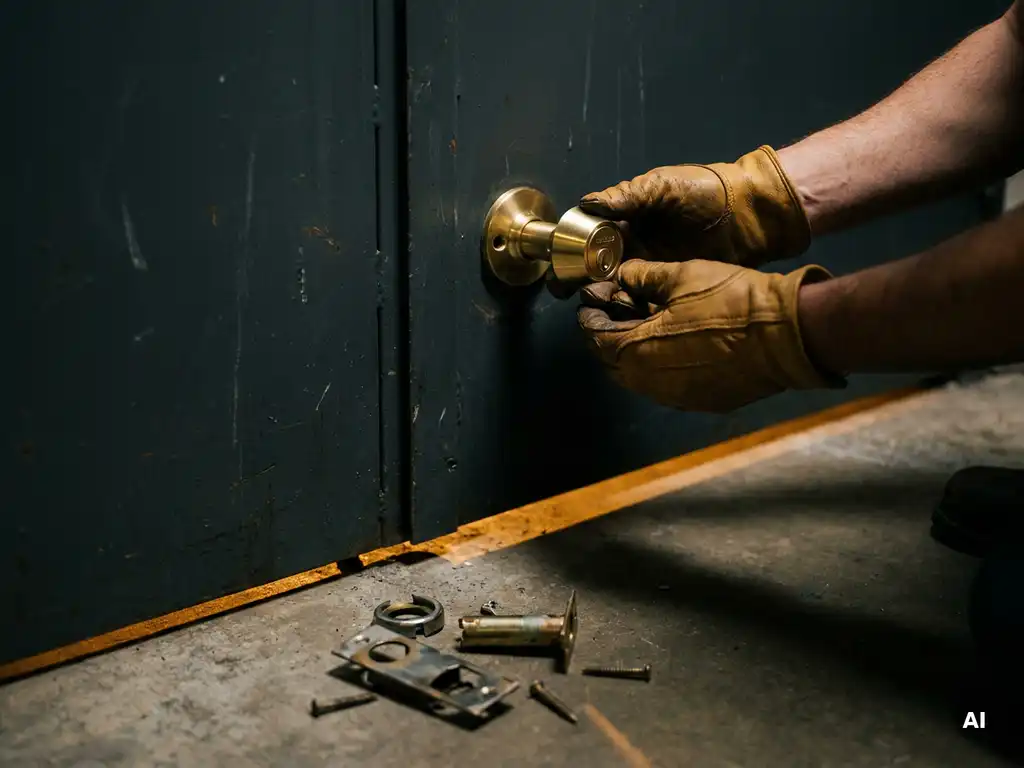
How do you prevent downtime caused by defective locks?
You can prevent downtime caused by a defective lock through regular maintenance, timely replacement of wear parts, and by choosing high-quality locks that match the load on your premises. For businesses, malfunctioning access is not only annoying, but it can also lead to security risks and production losses. If you have questions about the security of your location, you can always contact with Sellox. In this article, we answer the most frequently asked questions about lock maintenance, wear and tear, and reliable access management for commercial properties.
What are the most common causes of a defective lock?
The most common causes of a defective lock are wear due to intensive use, insufficient lubrication, the ingress of dirt and dust, damage from attempted burglaries, and the use of the wrong key. In commercial premises, the frequency of use also plays a major role: a lock operated dozens of times a day wears out considerably faster than a lock in a residential home.
In addition to mechanical wear, environmental factors can also damage a lock. Moisture, extreme temperatures, and exposure to chemical substances affect the internal mechanism. Exterior locks are particularly vulnerable to this, especially if they are not equipped with a weather-resistant finish. Improper use, such as forcing a jammed key, also significantly accelerates the deterioration of a lock.
Another underestimated cause is the use of keys that no longer fit perfectly because they are worn out themselves. A worn key exerts uneven forces on the pins in the lock, which eventually leads to damage to the cylinder mechanism.
How do you recognize the early signs of wear on a lock?
Early signs of wear on a lock include a key that turns stiffer than normal, a key that does not slide smoothly into the lock, a grinding or creaking sound when operating, and a locking rod that no longer fully extends. These signals indicate that the internal mechanism requires attention, even before the lock fails completely.
Also pay attention to subtler signals, such as a door that no longer locks properly without extra force or a cylinder that turns slightly when you haven't inserted the key fully. These types of behavioral changes are early warnings that you should take seriously.
With electronic or mechanical-electronic locks, error messages, slow response, and malfunctioning readers are also indicators of wear or a technical problem. Early intervention prevents a minor maintenance issue from escalating into a full-blown failure at an inconvenient time.
How often should you have locks serviced?
Locks in commercial premises must be inspected and maintained at least once a year. For intensive use, such as at the main entrances of offices, shops, or logistics locations, maintenance is recommended every six months. The more frequently a lock is operated, the faster internal parts wear out and the sooner professional maintenance is required.
During a maintenance service, a specialist checks the cylinder, strike plate, locking rod, and the entire door assembly for alignment and wear. Lubrication of moving parts is a standard part of this process. Preventive maintenance is almost always cheaper than an emergency replacement when a lock completely fails.
For properties with an extensive access controlMoreover, for this system, the software, readers, and connection to the central system must also be checked periodically, not only the physical locks.
What is the difference between lubrication and complete lock replacement?
Lubrication is a preventive measure in which moving parts of an existing lock are treated to reduce friction and extend their lifespan. Complete lock replacement is necessary when the mechanism is so worn or damaged that lubrication no longer solves the problem. The distinction lies in the severity of the deterioration: lubrication maintains, while replacement repairs structural damage.
When is lubrication sufficient?
Lubrication is sufficient if the lock is still mechanically intact but turns stiffer than desired. Always use a dry graphite- or Teflon-based lubricant for this; never WD-40 or other oil products. Oil attracts dirt and accelerates wear in the long run. A well-lubricated lock functions more smoothly immediately and has a longer lifespan.
When is replacement necessary?
Replacement is necessary if the cylinder is damaged by an attempted break-in, if pins or springs are broken, if the lock no longer locks reliably, or if the key can no longer be fully inserted or turned. Also, if a lock is older than ten years and causes regular problems, replacement is generally the wisest choice, both for security and business continuity.
Which locks are the most reliable for commercial premises?
The most reliable locks for commercial premises are SKG Class 3 cylinder locks, certified security cylinders with anti-core pulling and anti-drilling protection, and electronic access systems with an audit trail. The choice depends on the risk profile of the premises, the number of users, and the degree of control you want over who has access and when.
For buildings with many employees or fluctuating access rights, electronic systems offer a clear advantage. You can manage rights centrally, revoke them immediately upon the loss of a pass or the dismissal of an employee, and always see who entered the building and when. This not only increases security but also significantly simplifies management.
High-quality mechanical locks remain valuable as a backup or for locations where electricity is not a reliable option. The combination of a strong mechanical lock as an emergency solution and an electronic system as the primary access layer offers most businesses the best balance between security and ease of use.
What should you do if a lock suddenly refuses to work?
If a lock suddenly refuses to open, first check that the door itself is properly seated in the frame and that the key is not damaged or worn. Try to operate the lock gently without forcing it. If that does not help, call a certified locksmith. Forcing it will increase the damage and can damage the door or the frame, which will increase repair costs.
In a business setting, a suddenly malfunctioning lock is an urgent situation, especially if it involves a main entrance or a room containing critical equipment or valuable goods. Therefore, ensure that you always have the contact details of a reliable locksmith at hand and that your employees know what to do in the event of such a malfunction.
After an immediate solution, it is wise to have the cause investigated. A lock that suddenly fails almost always gives off signals before it completely breaks down. However, these signals are often ignored or not recognized. A brief inspection after the incident helps you determine whether the lock needs to be replaced or if maintenance is sufficient to prevent further problems.
Do you want to be sure that the locks and access system of your business premises are functioning optimally? Contact us with Sellox for professional advice and a tailored inspection.
Frequently Asked Questions
Can I perform lock maintenance myself, or do I always need a professional for that?
As a property manager, you can perform simple maintenance yourself, such as applying a graphite- or Teflon-based dry lubricant. However, for a full inspection of the cylinder, strike plate, and door alignment, it is advisable to engage a certified locksmith. They possess the correct measuring instruments and knowledge to detect hidden wear that is not visible to a layperson. This prevents you from overlooking a problem that could later lead to a complete breakdown.
How long does a high-quality lock last on average in a business environment?
A high-quality mechanical lock of SKG class 2 or 3 lasts on average ten to fifteen years with normal use and regular maintenance. With intensive use, such as at a busy main entrance, the lifespan may be shorter, depending on the number of operations per day. Electronic components in access systems generally have a shorter replacement cycle of five to ten years, partly due to technological developments and software updates. In both cases, regular maintenance is the most important factor for a long service life.
What are the risks if I put off lock maintenance for too long?
If you postpone lock maintenance for too long, you increase the risk of a sudden breakdown at an inconvenient time, such as outside office hours or during a busy workday. In addition to the practical inconvenience, a defective lock also poses security risks: a lock that no longer locks reliably offers insufficient protection against unauthorized access. Moreover, emergency repairs and replacements are almost always more expensive than planned preventive maintenance. For companies with critical areas or valuable goods, downtime due to a lock defect can also have direct financial consequences.
What should I do if an employee loses their access card or key?
In the event of a loss of a key for a mechanical lock, it is strongly recommended to have the cylinder replaced immediately, as you cannot rule out the possibility that the key has fallen into the wrong hands. With an electronic access system, this is much simpler: the lost card can be blocked centrally and immediately without the need to replace any physical parts. This is one of the biggest advantages of electronic access systems for companies with multiple employees. Also ensure that employees know who to report a loss to immediately, so that action can be taken quickly.
Are there specific locks or systems that are more resistant to burglary attempts?
Yes, locks with an SKG*** certification (three stars) offer the highest mechanical resistance against burglary techniques such as drilling, pulling, and core pulling. Preferably, combine this with security door hardware that provides extra protection for the cylinder against physical attacks. However, for optimal security, the cylinder is only one component: the door, frame, and strike plate must also be burglar-resistant. A professional security inspection gives you insight into the weakest links in your overall access security.
How do I efficiently manage access rights as my company grows and more and more employees join?
With a growing workforce, a central electronic access control system is virtually indispensable. It allows you to configure which rooms are accessible and at what times for each employee or department, and easily modify or revoke access rights without having to replace physical keys. Many systems also offer an audit trail, so you can always see who had access to which room and when. Engage a specialist for the selection and implementation of such a system to ensure it is configured to scale and accommodate your organization's future growth.
What is the difference between a security cylinder and a standard cylinder, and when do I need which one?
A standard cylinder offers basic security and is suitable for areas with a low risk profile, such as internal doors or storage rooms with few valuable contents. A security cylinder is equipped with additional protection mechanisms such as anti-core pulling, anti-drilling, and a key card system that prevents key duplication, making it suitable for exterior doors and access to sensitive areas. For commercial premises, a security cylinder at the main entrance and other critical points is an absolute minimum requirement. A professional risk analysis helps you determine which security level is appropriate for every door in your building.