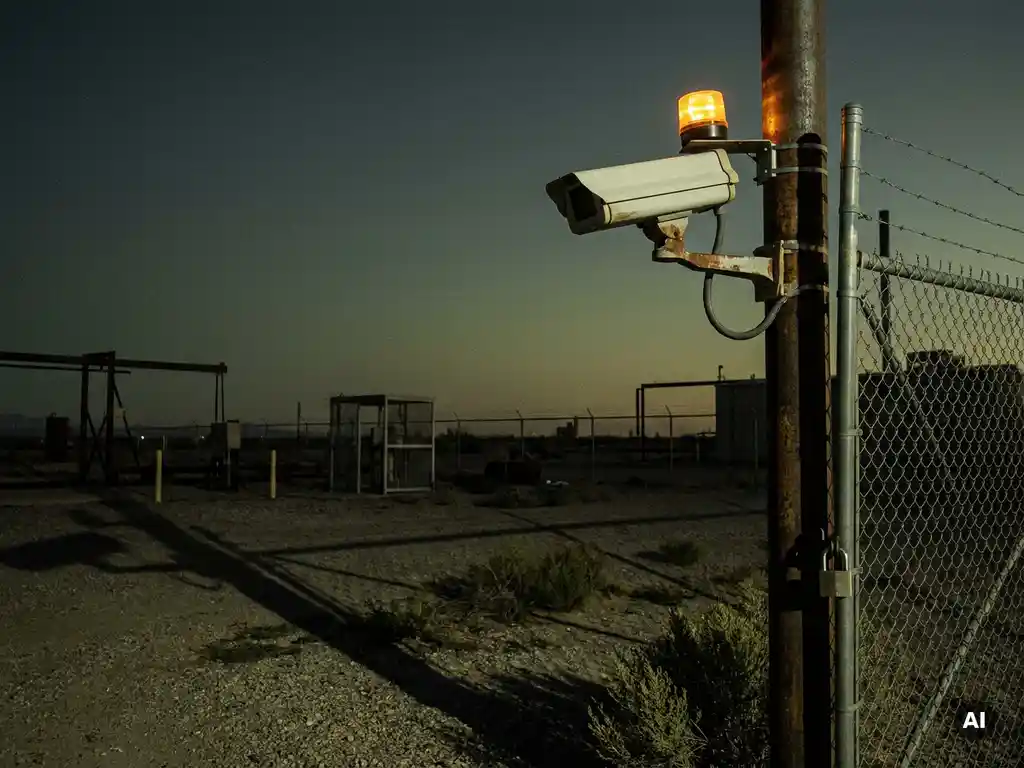
How do you secure a remote location?
You secure a remote location through a combination of physical barriers, electronic surveillance, and access control tailored to the situation. Because there is no permanent crew present and emergency services take longer to arrive, such a location requires a well-thought-out approach where systems can function independently. In this article, we answer the most frequently asked questions about remote security, from specific risks to long-term management. Do you have an immediate question? Feel free to contact us and we will help you further.
What are the specific risks for remote locations?
Remote locations face an increased risk of theft, vandalism, and unauthorized access precisely because the absence of people and supervision makes them attractive to malicious actors. Furthermore, fire hazards, power outages, and weather damage are more difficult to detect when no one is on site. The combination of isolation and delayed response time significantly increases the potential damage.
Specifically for remote sites, the following risks play a major role:
- Theft of equipment and materials: Construction sites, agricultural plots, and industrial locations are popular targets for metal thieves and burglars.
- Vandalism: Without visible supervision, the threshold for vandalism is lower.
- Unauthorized access: Visitors, squatters, or intruders who enter the premises without permission may cause damage or create liability risks.
- Fire and environmental damage: A fire or leak that remains undetected for hours can have catastrophic consequences.
- Delayed assistance: Police and fire services need more time to arrive at the scene, resulting in greater damage.
The risk profile varies by type of location. An abandoned farm requires a different approach than a temporary construction site or a power installation in a wooded area. A thorough risk analysis is therefore the first step in setting up remote security.
Which security measures are most effective remotely?
The most effective security measures for remote locations are a combination of physical access control, camera surveillance with remote monitoring, and alarm systems capable of independent communication. No single measure works optimally on its own; the strength lies in the layering of the system.
Physical measures
Fences, barriers, and lockable access gates form the first line of defense. They slow down intruders and make unauthorized access visible. Combined with good access management, where only authorized persons can enter the premises via badges, PIN code, or biometrics, you significantly limit the risk.
Electronic and digital measures
Security cameras with motion detection, alarm systems with GSM communication, and remote monitoring via a control room ensure that incidents are detected quickly, even if no one is on site. Furthermore, smart sensors can detect fire, flooding, or power outages and send an immediate notification. For locations with limited infrastructure, solar panels and 4G connections are common solutions to keep systems operational.
How does camera surveillance work at a location without power or internet?
Camera surveillance operates at locations without power or internet via self-sufficient systems powered by solar energy or batteries, combined with 4G or 5G connections for data transmission. Images are stored locally on a memory card or hard drive and simultaneously transmitted wirelessly to a monitoring center or secure cloud environment.
Modern security cameras for remote areas are specifically designed for these types of conditions. They have low power consumption, operate on solar panels with a buffer battery for cloudy periods, and connect via mobile networks. Some systems activate the camera only upon motion detection, extending battery life and utilizing storage more efficiently.
An important consideration is image quality at night. Choose cameras with infrared illumination or thermal imaging if the location needs to be monitored at night as well. For temporary installations, such as on a construction site, mobile camera towers are a popular choice: they are quick to set up, self-sufficient, and immediately operational.
When is a security service necessary for a remote site?
A professional security service is necessary for a remote site when risks are high, the value of the goods present is substantial, or when electronic systems alone do not provide sufficient deterrence or response. Human surveillance is also often indispensable during temporary, high-risk situations, such as a construction phase or a vacant property.
Specific situations where a security service is strongly recommended:
- Locations with valuable equipment or hazardous substances
- Temporary projects where theft directly leads to delays and high costs
- Properties with a history of burglaries or vandalism
- Situations where the insurer requires the presence of supervision as a condition
- Locations where an alarm alone is not followed up quickly enough by emergency services
Guards can perform surveillance duties at fixed or varying times, making it unpredictable for outsiders when someone is present. This significantly increases the deterrent effect compared to electronic security alone.
What does security for a remote location cost on average?
The costs for securing a remote location vary widely and depend on the area, the chosen system, and the level of human surveillance. A basic setup with solar-powered cameras and a 4G connection typically starts at a few hundred euros per month, while a complete solution with monitoring center integration and security services can end up being significantly higher.
Indicative cost items are:
- Mobile camera systems: Renting a mobile camera tower costs on average between 200 and 600 euros per month, depending on the specifications and the contract.
- Control room connection and remote monitoring: Monthly subscription costs range from 50 to 200 euros, depending on the service.
- Security services: Hourly rates for a security guard typically range between 30 and 60 euros, depending on the time of day and the required qualifications.
- Access security and fencing: One-time installation costs, depending on the size of the site.
Do not be tempted by the cheapest option if the risk profile is high. A burglary or fire that goes unnoticed typically results in much higher costs than a well-designed security system.
How do you keep a remote location secure in the long term?
Keeping a remote location secure in the long term requires regular system maintenance, periodic risk assessments, and a clear protocol for who has access and when. Security is not a one-time investment, but an ongoing process that adapts to the situation at the location.
Practical steps for long-term security:
- Schedule periodic inspections: Check cameras, sensors, and fencing for damage, contamination, and technical malfunctions. Outdoor systems are vulnerable to weather conditions.
- Update access management: Remove access rights from individuals who are no longer active at the location and add new employees in a timely manner.
- Evaluate the risk profile annually: The situation at and around a location can change. New activities, a changing environment, or incidents in the vicinity may necessitate adjusting security.
- Test alarm systems regularly: Ensure that reports actually reach the control room or responsible persons.
- Document incidents: Keep a record of what occurred, how the response was, and what the outcome was. This helps with future risk analyses and potential insurance claims.
A security partner who knows the location and thinks proactively makes the difference in the long run. Do you want to know which approach best suits your situation? Contact us contact Sellox for a no-obligation consultation.
Frequently Asked Questions
How do I know which combination of security measures best suits my specific location?
The right combination depends on your risk profile, the value of what you are securing, the available infrastructure, and the budget. Always start with a professional risk analysis in which a security specialist assesses the location for weak points, access points, and environmental factors. Based on this, a layered security plan is drawn up that combines physical, electronic, and potentially human measures that complement each other.
What are the most common mistakes when securing a remote location?
A common mistake is relying on a single security measure, such as just a fence or just cameras, without layering the system. Additionally, many owners underestimate the importance of maintenance: cameras that become dirty, batteries that run out, or alarm systems that are not tested create a false sense of security. Finally, access management is often overlooked: old access rights of former employees or contractors pose a real security risk.
As the owner, can I watch live via the security cameras at my remote location?
Yes, most modern security systems for remote locations offer the ability to remotely view live footage, receive notifications, and even communicate via a built-in speaker using a secure app or web portal. This works via the system's 4G or 5G connection and does not require a fixed internet connection at the location. However, please keep in mind that this is a supplement to professional monitoring, not a replacement.
What do I need to arrange with the insurer if I want to insure a remote location?
Insurers typically set specific requirements for the security of remote or unguarded locations before providing coverage, such as a certified alarm system, monitoring center connection, or even periodic human surveillance. Ask your insurer explicitly which security standards apply to your type of location and ensure you can provide documentation of the installed systems. Furthermore, a good security system can lead to a lower insurance premium.
How quickly can a security system be operational at a temporary location such as a construction site?
Mobile security systems, such as solar-powered camera towers with 4G connectivity, can typically be installed within one working day and are operational immediately after installation. They require no excavation, fixed cabling, or internet connection, making them ideal for temporary projects. Once the project is completed, the systems are easily removed and deployed to a subsequent location if desired.
What happens if the 4G signal drops or the solar panels do not supply enough power?
Professional systems for remote locations are designed to continue functioning even during signal loss or limited power generation. Images are stored locally on a memory card or internal hard drive and are synchronized as soon as the connection is restored. A buffer battery ensures that the system remains operational even during cloudy periods or at night; in the event of a prolonged outage, the system automatically sends an error message to the control room or administrator.
Is it mandatory to inform visitors or passers-by about camera surveillance on remote premises?
Yes, even at remote locations, you are required under the GDPR to clearly indicate that camera surveillance is taking place, for example via signs at the entrances to the site. Additionally, you must record who has access to the footage, how long the footage is stored, and for what purpose the cameras are used. If in doubt, consult a legal advisor or your security partner to ensure that you comply with applicable privacy legislation.