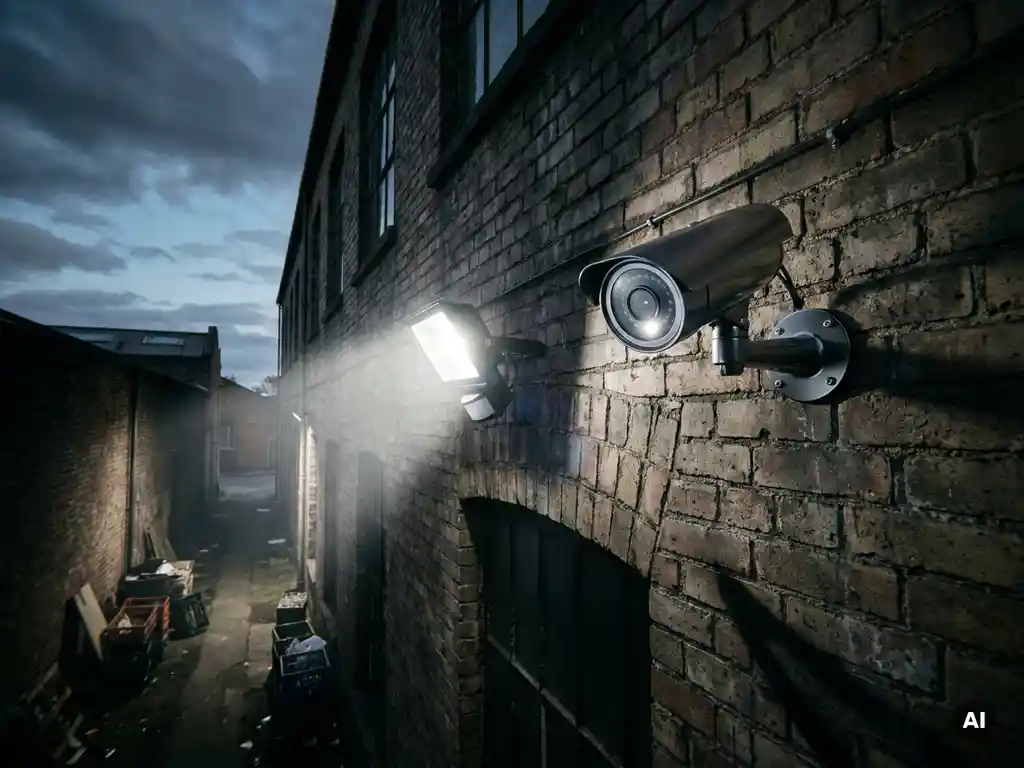
How do you secure a building against vandalism?
You secure a property against vandalism through a combination of physical measures, visible camera surveillance, good lighting, and, where necessary, professional security. No single measure works optimally on its own: the strength lies in the interplay of multiple layers of security. Do you have questions about the approach that suits your situation? You can always contact with Sellox for tailored advice. In this article, we answer the most frequently asked questions about vandalism prevention, from vulnerable spots to what to do after damage has been done.
Which places on a building are most vulnerable to vandalism?
The most vulnerable spots on a building are typically blank walls, side entrances, parking lots, loading and unloading zones, and poorly lit corners. These are locations with little social control, limited visibility, and a low chance of immediate detection. Vandalism almost always takes place in locations where perpetrators believe themselves to be invisible.
Facades bordering alleys or back streets are particularly vulnerable to graffiti and vandalism. The same applies to roller shutters, mailboxes, and entrance doors that are unguarded outside office hours. Less obvious vulnerable points are technical installations outside the building, such as air conditioning units or electrical cabinets, which can be damaged relatively easily.
A good risk analysis begins with a walk-through of the premises, preferably at different times of the day and evening. This provides a realistic picture of which zones require the most attention and which measures are most effective there.
Which physical measures best protect a building?
Physical measures that best protect a property against vandalism are anti-graffiti coating on facades, robust fencing, vandal-resistant lighting, reinforced doors and windows, and a well-furnished access control system. These measures raise the threshold for vandalism and limit the damage should it occur.
Anti-graffiti coating is one of the most cost-effective investments for properties that are regularly vandalized. The coating ensures that graffiti is easy to remove without damaging the facade. At the same time, a clean, well-maintained facade is less likely to encourage vandalism than an already damaged or dirty surface.
Access control plays a larger role than is often thought. By actively preventing unauthorized persons from entering the premises, you significantly reduce the risk of vandalism. Consider barriers, access gates, intercom systems, and electronic locks. Those who cannot enter the premises cannot cause damage.
How does camera surveillance help prevent vandalism?
Camera surveillance helps prevent vandalism by creating a clear deterrent effect. Visibly placed cameras signal to potential perpetrators that their actions are being recorded. Moreover, in the event of an incident, camera footage provides immediately usable evidence for police reports and insurance claims.
The deterrent effect is greatest when cameras are prominently present and clearly visible to anyone entering the premises. Motion-activated cameras that automatically zoom in or emit a signal upon activity further enhance this effect. Moreover, if you combine camera surveillance with live monitoring by a control room, an incident is detected in real time and immediate action can be taken.
Cameras also cover areas that are physically difficult to secure, such as long facades or expansive parking lots. A strategically placed camera system therefore forms an indispensable addition to the physical security layer.
What does lighting do to discourage vandalism?
Good lighting discourages vandalism because perpetrators avoid visibility. A well-lit building offers no dark corners to remain unnoticed, which greatly reduces the risk of destruction or graffiti. Lighting is therefore one of the simplest and most affordable preventive measures.
Motion sensors that activate lighting as soon as someone enters the premises are particularly effective. They surprise potential perpetrators and attract the attention of bystanders or security guards. Fixed lighting along facades, at entrances, and in parking lots ensures a basic level of visibility throughout the night.
When choosing lighting, pay attention to the vandalism resistance of the fixtures themselves. Lighting that is easy to smash offers little protection. Opt for robust, high-mounted fixtures with protected housings so that the lighting continues to function even under pressure.
When is a security service useful for vandalism prevention?
A security service makes sense when a property is regularly subjected to vandalism, when the location is difficult to fully secure using passive means, or when the risk of financial or reputational damage is significant. Human surveillance adds something that cameras and lighting cannot: direct intervention.
Security guards can patrol routes past vulnerable points, address unauthorized persons, and take immediate action or call emergency services in the event of a threat. This makes a security service particularly valuable at locations with a high-risk profile, such as construction sites, business parks, event venues, and vacant buildings.
Deploying security is also an effective choice for temporary situations, such as renovations or periods of heightened threat. The presence of recognizable security has a strong preventative effect and provides peace of mind to property owners and users.
What to do after an act of vandalism to a property?
After an act of vandalism, always first file a report with the police, document the damage extensively with photos and videos, and report the incident to your insurer. Then, remove the damage as soon as possible, because a damaged property attracts new vandals.
Rapid damage mitigation is not only aesthetically important. Research into environmental psychology shows that visible neglect or damage lowers the threshold for new vandalism. By quickly removing graffiti and repairing damage immediately, you break this pattern.
Also use an incident as an opportunity to reassess the security situation. Which area was vulnerable? Was there a lack of lighting? Was there no camera pointed at the damaged zone? A targeted evaluation following an incident yields valuable information to prevent recurrence. Subsequently, consider taking additional measures tailored to the specific vulnerabilities exposed by the incident.
Preventing vandalism requires a layered approach: the right physical measures, smart camera surveillance, good lighting, and professional security where necessary reinforce each other. Would you like to know which combination best suits your property and situation? Contact us with Sellox, and we are happy to think along with you.
Frequently Asked Questions
How do I know which security measures are most suitable for my specific property?
The best approach begins with a professional risk analysis of your property, examining the location, type of use, surroundings, and history of incidents. Based on this, you can make targeted choices regarding the combination of measures—such as camera surveillance, lighting, or access control—that is most cost-effective for your situation. A security specialist like Sellox can assist you with this through tailored advice.
What are the most common mistakes made when securing a property against vandalism?
A common mistake is relying on just a single measure, such as cameras only or lighting only, without adopting a layered approach. Additionally, maintenance is often overlooked: cameras with dead batteries, broken lights, or outdated access systems provide a false sense of security. Ignoring blind spots—zones that fall outside the view of cameras or guards—is also a common problem that is easy to detect during a walkthrough.
Is anti-graffiti coating also suitable for older or historical facades?
Yes, there are special anti-graffiti coatings suitable for sensitive surfaces such as natural stone, brick, and historic masonry, without affecting the appearance or structure of the facade. However, it is important to choose a coating that breathes so that moisture can escape from the wall and prevent damp problems. If in doubt, consult a specialized supplier with experience in monumental or historic buildings.
Does my insurance always cover damage caused by vandalism, and what do I need to arrange for that?
Vandalism coverage is not included as standard in every buildings insurance policy; check your policy carefully or ask your insurer for clarification. In any case, ensure that you always file a police report and immediately document the damage with photos and videos, as this is usually a requirement for a successful claim. Furthermore, some insurers offer a discount or better terms if you can demonstrate that you have taken preventive security measures.
How do I effectively secure a vacant property against vandalism?
Vacant properties are particularly vulnerable because there is no daily presence to act as social control. Effective measures include installing temporary cameras and motion sensors, securing all access points with robust locks or fencing, and deploying periodic surveillance rounds by a professional security service. It is also advisable to blind windows and doors if possible, so that the property appears occupied and is less inviting to vandalism.
Can I, as a small business owner or homeowners' association, also implement affordable vandalism prevention?
Absolutely — vandalism prevention doesn't have to be expensive. Measures such as good lighting with motion sensors, clear signage, and anti-graffiti coating are relatively inexpensive and have a proven preventative effect. Furthermore, for Owners' Associations, it can be beneficial to invest jointly in a shared camera system or collective surveillance agreements, keeping costs per party low while improving the security of the entire complex.
How often should I review my security plan to keep it effective?
It is advisable to evaluate your security plan at least once a year, as well as immediately after any incident or in the event of significant changes to the surroundings or the use of the premises. Technology and threat landscapes change, and what was adequate last year may now show shortcomings. A periodic walkthrough combined with a consultation with your security advisor helps you remain proactive and close vulnerabilities in a timely manner.